Shakti does not Diagnose, Treat or Prevent Medical Disorders. No Statements about Shakti For Windows have been evaluated by the FDA.
Contact
|
. |
Transformation With Shakti
Using Shakti for spiritual or personality transformation is largely a matter of repeating the session design that works best for you as well as participating in the process in your day-to-day life.
If you are looking to overcome fear, anger, or sadness, you should try the the feelgood session . One thing you can look at in your own life to guess if it will work out well for you is how you feel in the morning. If you are “NOT a morning person”; if you are ‘at your worst’ when you wake up in the morning, then the feelgood session is the first session to try using Shakti for personal transformation. (Not intended for psychiatric disorders)
In another example, there are sessions that can facilitate dreaming phenomena. By themselves, they can be enough. But more can be accomplished by also doing at least one of the more traditional dreaming practices, like keeping a dream diary or doing auto-suggestion before going to sleep (“I will remember my dreams when I wake up”).
If you are looking to enhance your spiritual practice with Shakti, you need to choose your session according to which practice works for you. You should also read about how to combine meditation with Shakti effectively.
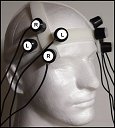
The hippocampus on the right side dominates non-verbal thought (like thinking in colors or musical tones, or writing poetry that puts words together by how they feel as much as what they mean). Thinking without words can only happen when the ‘internal’ dialog stops. Stopping the internal dialog is one of the first things that has to happen before meditation can begin to bear fruit. Stimulating the hippocampus on the right can help to do this, but the resulting states of consciousness will gain in depth if they’re accompanied by meditation practice. Any non-verbal ‘tasking’ for the mind can be used with the hippocampal signal. Visualizations, guided imaginations, ‘toning’, mindfulness exercises of any kind, gazing techniques or any other technique that works without words.
The same principle applies to the left hemisphere, prayer, and the amygdala signal.
If you were to pursue intelligence enhancements, and used frontal lobe sessions, how would you know if your intelligence were enhanced without applying it to something? You might find that you were having ideas that were more complex than before, or that you seem to see things a ‘level deeper’ than before. Or you might only notice enhancements in your intelligence when you applied it. The same applies to your capacity for awareness, love, or creativity.
One of the rules that governs the brain is the ‘principle of use-dependency’. This is where having a faculty or skill depends on using it. “Use it or lose it”.
Whatever your Shakti sessions bring up for you, you need to apply them to retain them. Doing this will mean paying attention. Living at a higher level, or only having more such moments, means wanting them to be there. Shakti is a powerful tool for this, but there are limits to what any spiritual technology can do without your participation.
This can mean doing a spiritual practice, or it can mean just paying attention to the effects of your sessions.
_____
Complete instructions are embedded in the software. Free Tech Support is Available.
_____
8 Coil Shakti – $285.00
Shipping – (USA) $12.50 (International) – $25.00.
_____
In the USA, you can order by calling (toll-free):
855-408-7888
By calling this number, you agree that you understand and agree to the terms of sale, listed HERE.
Read them before you order.
_____
Email Your Questions About The 8 Coil Shakti
Contact Us
_____
30 Day Money Back Guarantee.
Refund terms and conditions
_____
Legal: Templates for many signals are licensed for use with Shakti For Windows by Dr. M.A. Persinger and Stan Koren.
.
.
.
.
.
.
.
.